A Home That Supports the Way You Want to Live
We help older adults and their families make homes safer, more comfortable, and easier to live in — with practical improvements, thoughtful guidance, and technology when it truly helps.

How It Works
Three simple steps to a home that supports the way you live.
01
Understand Your Home
We start with a Home Readiness Assessment to understand your home, your priorities, and how you use it every day.
02
Create Your Plan
We identify practical improvements and recommend the right combination of home modifications, thoughtful design, and optional technology.
03
Make It Happen
We coordinate the improvements and make sure everything is implemented thoughtfully, so you’re not left figuring it out on your own.

A Whole-Home Approach to Aging in Place
We help older adults and their families create homes that support safer, more comfortable, and more independent living.
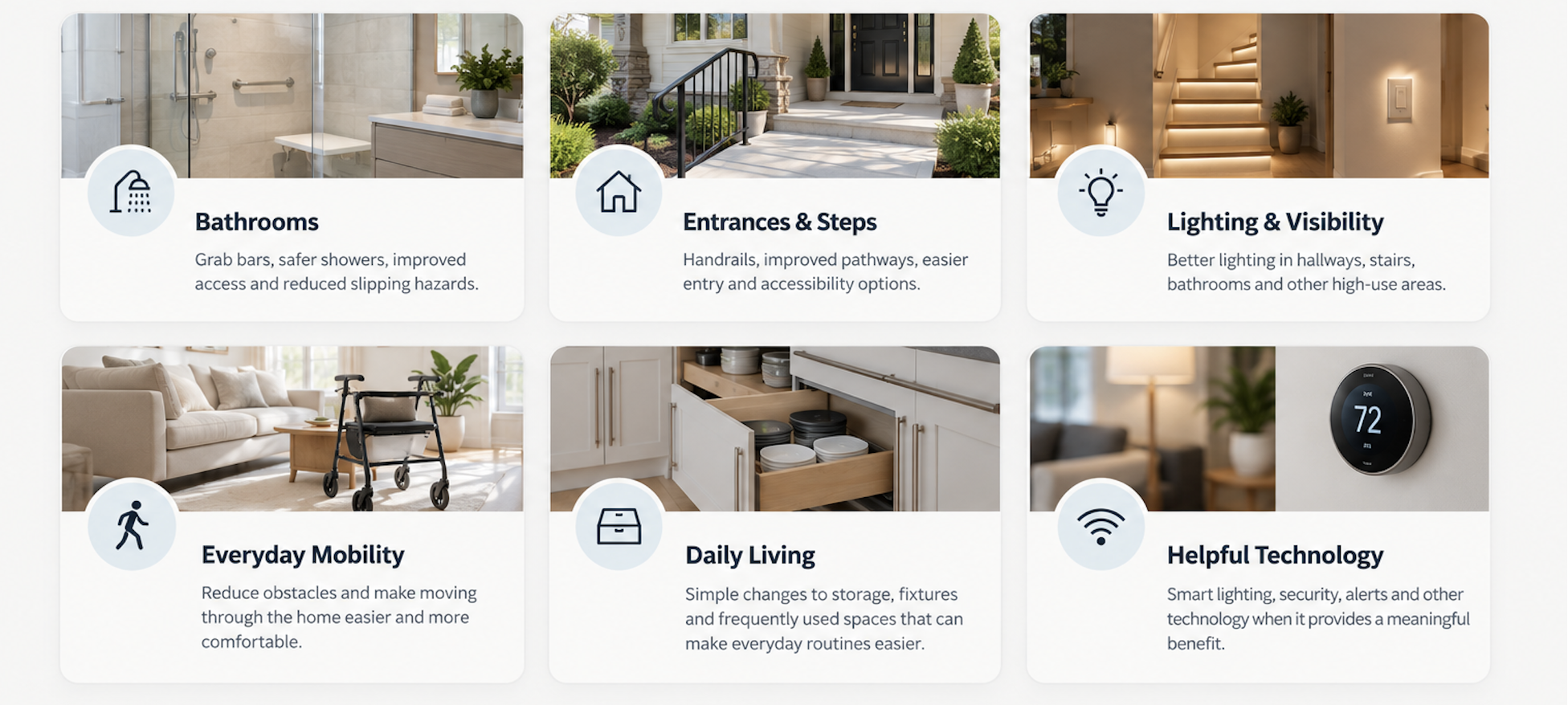
We look at the whole home — from entrances, bathrooms, lighting, and everyday movement to thoughtful design and technology when it truly helps. The goal isn’t to add more products. It’s to understand how you live and make the home work better for you.
Why Families Choose Smart Aging Solutions
Practical guidance, thoughtful solutions, and a home designed around the person who lives there.
Whole-Home Perspective
We look beyond individual products to understand how your home supports everyday living.
Recommendations Built Around You
Every recommendation is based on your needs, priorities, routines, and home — not what we want to sell.
Technology Only When It Helps
We use technology when it adds meaningful safety, comfort, or convenience — never simply because it’s available.
What Is a Home Readiness Assessment?
A practical look at how well your home supports the way you live today — and how it can continue supporting you in the years ahead.
What You’ll Receive
Clear Priorities
See which improvements are worth considering first based on your home and everyday needs.
Practical Recommendations
Get straightforward recommendations for changes that can improve safety, comfort, and ease of use.
Technology Options
Learn where simple technology may help — and where it may not be necessary.
A Path Forward
Understand your options and decide what, if anything, you’d like to do next.
Guided by Aging-in-Place Best Practices
Our approach is informed by specialized aging-in-place education and proven principles for creating homes that support safety, comfort, independence, and everyday living.

.png)
Resources for Families and Older Adults
Practical guidance to help you make your home safer, more comfortable, and ready for the years ahead.
.png)
5 Signs Your Home May Need to Adapt as You Age
Simple things to look for in entrances, bathrooms, lighting, everyday movement, and other high-use areas.

How to talk to your parents about aging in place without the awkwar...
Starting the conversation about safety and independence can be tough. Here’s h...

5 smart home upgrades that help seniors live safely and independe...
Discover simple, affordable smart devices that can prevent falls, improve lighting, a...
Frequently Asked Questions
Have questions about Smart Aging Solutions? Here are answers to some of the most common questions about assessments, home improvements, pricing, and how we help you prepare your home for the years ahead.
Yes. Many improvements can be made without major changes to the home. We can recommend renter-friendly solutions and help identify when landlord approval may be needed.
We walk through the home with you, looking at everyday movement, bathrooms, lighting, entrances, frequently used spaces, and other areas that may affect safety, comfort, and independence. Afterward, you receive a personalized report with our findings and recommendations.
Not at all. Our goal is to identify the changes that would make the greatest difference for you. Some recommendations may be simple adjustments or products, while others may involve larger modifications when appropriate.
Yes. When you decide to move forward, Smart Aging Solutions can coordinate the recommended improvements and provide a proposal based on the solutions you choose.
Every home and situation is different. We begin with a Home Readiness Assessment to understand your priorities and identify appropriate solutions. If you move forward with an SAS proposal, the cost of your assessment is credited toward the project.That last sentence is particularly valuable because it turns the FAQ into a subtle reason to book the assessment without making the page feel sales-heavy.
Ready to Understand Your Home Better?
Start with a Home Readiness Assessment and get practical guidance based on your home, your priorities, and the way you live.
.png)